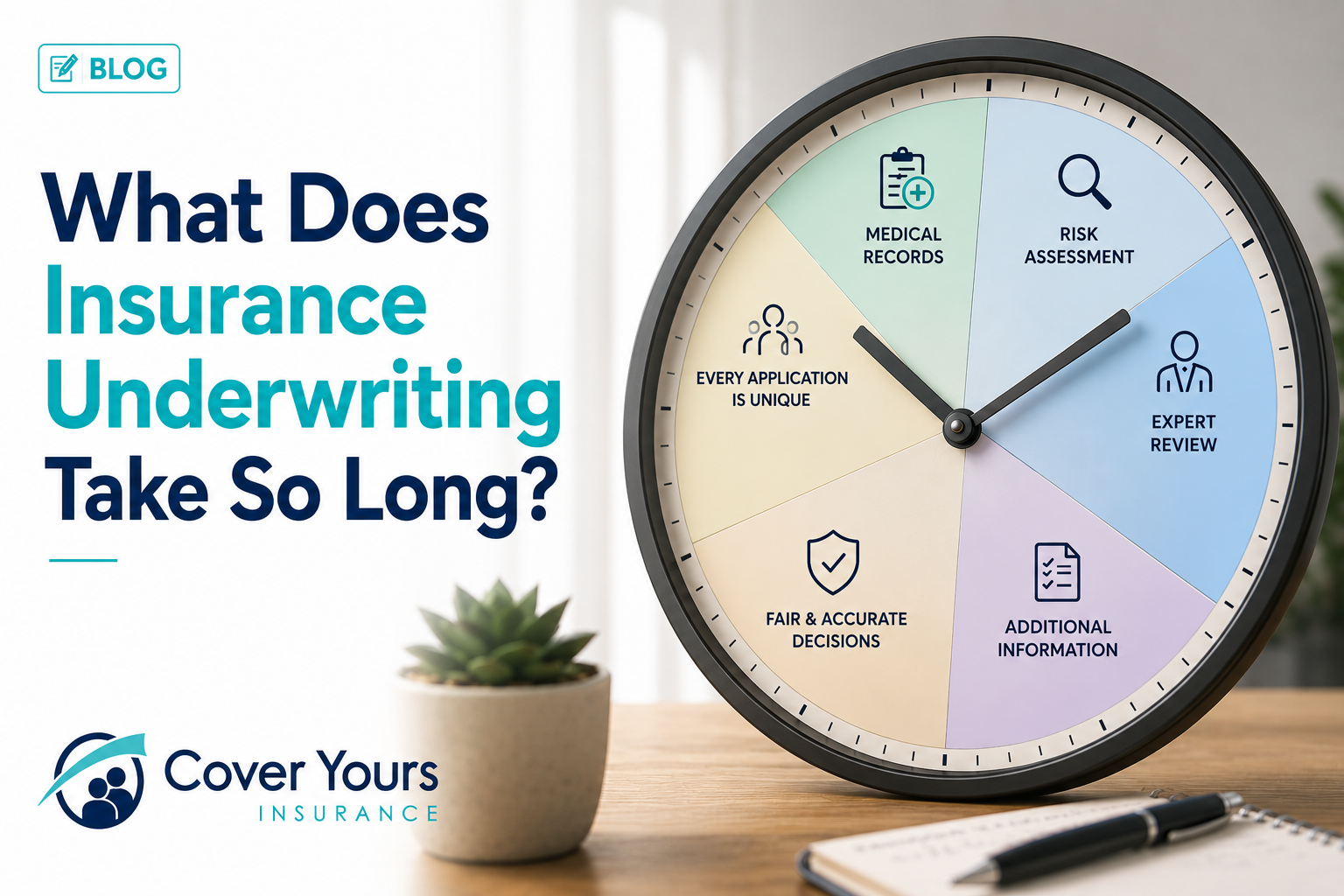
Applying for life, trauma, income protection, or health insurance often involves more questions than people expect. That's because insurers need to understand the risk they're taking on before offering cover. This process is called underwriting. Understanding what happens during underwriting can help explain why medical information is requested, why GP reports can cause delays, and why getting things right upfront matters at claim time.
If you've ever applied for life insurance, income protection, trauma cover, or health insurance, you've probably asked - "Why is this taking so long?"
Most peoples eperience is of insuring things. A car, house or contents can often be insured online in minutes. Travel insurance can be purchased with a few quick clicks.
Personal insurance is different because humans are a bit more complex and the contracts last longer than a few weeks or a year.
When you're applying for life, health, trauma, or income protection insurance, the insurer isn't assessing a house, a ute, or a laptop. They're assessing a person.
What Is Insurance Underwriting?
Underwriting is the process an insurer uses to understand and assess how much of a health risk a person is before offering cover. Simply put the insurer is calculating the chances of the applicant dieing, becoming ill or having an accident.
This is not as straightforward as it sounds unless someone has never been ill, never had a major accident, has been dealt a lucky genetic card and their immediate family is the same.
The reality is most people have a medical history, occupation or lifestyle factors, a family history, and a story to tell. It's what makes us human.
Our exciting lives is why underwriting exists.
Why Do Insurers Ask So Many Questions?
the insurer is placing a bet on you based on the information you give at application. The bet can't be changed and can last a life time. This is a commitment designed to lasts longer than 40% of New Zealand marriages.
They don't know whether you'll ever make a claim.
They don't know what your health will look like in five years.
What they do know is that once they accept the application, the can only come back later and change the contract if they find out that an applicant failed to disclose something relevant. They can't make changes justt because your health deteriorates.
That's why insurance companies put so much effort and expense into understanding the risk upfront. This rigorous approach at underwriting creates certainty for both the insurer and the client.
Why Does My Medical History Matter?
One of the common questions I get is, "Why does the insurer want to know that?".
A common answer I am given is, "I am fit and healthy."
Once I ask a few questions we usually uncover the caveat. They are fit and healthy now. But they have had a previous surgery, get recurring back twinges, take medication for anxiety, have medically managed high blood pressure, and old sports injury that left pins there.
Something they haven't thought about in years and is just part of their life story but sometimes these details have an impact on the application. That impact can be huge or it could be utterly inconsequential. It can really surprise clients what an underwriter can focus on and what they will let go.
The challenge is that neither you nor the insurer knows which category something falls into until it has been reviewed properly. That's why full disclosure matters. Give the underwriter everything and let them make an informed choice. That way there can be certainty at claim time.
The GP Report Bottleneck
If underwriting has a reputation for being slow, it is not always the insurers fault. If you think about it the insurance company is highly motivated to get your insurance on their books and premiums flowing as quickly as possible.
Next to clients going radio silent when asked follow up question, requesting GP reports are the reason for a delay. An insurer may review an application and decide they need more information before making a decision. That means requesting notes from your doctor or specialist. Unless it is an unusual case the notes being asked for a very specific.
Unfortunately, insurers don't control how quickly those records arrive. Neither does your adviser.
Medical practices are busy, requests go into queues, and sometimes further clarification is needed once the notes are reviewed. This is a common causes of delay.
Why Do More Questions Keep Appearing?
I'm pften asked by clients why insurers can't ask everything at the beginning.
The simple answer is that underwriting happens in layers. Online applications try to deal with this by asking more detailed and clarifying questions with every disclosure but an algorythm and drop down menu can only do so much.
When an application gets reviewed by the underwriter. That review may raise a further question. They underwriter may have to ask the applicant for clarification. The answer to that question raises another.
If a medical report is requested when it arrives it creates additional context, and sometimes more questions. It's not unusual for an underwriter to gradually build a picture of the risk over several weeks.
Each clarification and question that is asked puts the application to the bottom of the pile so the underwriter can move on to the naxt assessment. That is why it is essential clients respond promptly and accurately to questions asked by the underwriter or adviser.
Frustrating at times?
Absolutely, but there's a reason for it.
What Happens If You Have Existing Health Issues?
Many people assume that a medical condition automatically means they won't get cover and in many circumstances that's just not the case. The insurer wants the business, just not at any risk.
Existing health conditions don't immediately disqualify the person from being insured. Sometimes the health condition doesn't impact the risk too adversly, other times it can result in an exclusion (maybe only temporary), another option is the premium can be increased to cover off the risk. If there are ongoing health investigations then a decision may be deffered.
Sadly what terms that are appropriate for the insurer are not always what the client wants. Managing these expectations is something a competent adviser will do with clients. A truly independent adviser will call all relevant companies to do some pre-underwriting and find out who is likely to give the best outcome.
Every case is different.
Why Full Disclosure Matters
Most claims are declined due to non-disclosure.
Non-disclosure doesn't happen because people are dishonest. They happen for three main reasons.
i) People forget things. It's not easy to remember every trip to the GP or specialist. Manage my health is your friend here.
ii) People assume something isn't relevant. Perhaps the GP said don't worry about it. Just because the Dr isn't concerned about it now doesn't men that an underwriter won't be worried about it.
ii) People sometimes answer a question too quickly and don't take the time to think.
The problem is that today's forgotten detail can become tomorrow's claim issue. Good underwriting relies on good information and good claims start with good underwriting.
At Cover Yours we understand that a claim starts at the application stage and we have strategies to minimise the risk of non-disclosure. Full disclosure is vital as the most expensive policy is one that doesn't work at claim time.
What Does an Adviser Actually Do During Underwriting?
A lot of underwriting work happens behind the scenes and advisers are a huge part of that. The more complicated or unusual an application the more work is involved.
Clients will see some of this work. They might get calls or emails with clarifying questions about disclosures. The adviser will also be in regular contact with the insurer, managing the requests, advocating and explaining medical disclosures, challenging exclusions and loadings, negotiating for better terms and generally keeping the whole thing moving along.
A straightforward application may require no underwriting and will be issued on the spot but this is not the norm. More complex cases are becoming common as people are generally being diagnosed with more conditions.
The Goal Is Confidence, Not Speed
Everyone wants insurance approved quickly.
Clients want the cover. Advisers want happy clients. Insurers want the monthly premiums to start.
Speeding through underwriting in a slapdash manner is how mistakes are made. Mistakes that may only come to light at the worst possible time. Speed is not the objective, Cconfidence in the protection is.
When a claim happens years later, nobody wants surprises. We avoid that by making sure the disclosures were complete, the underwriting was done properly, and any exclusions or endorsements are fair and justified.
Confidence in the cover is ultimately what underwriting is designed to achieve. A bit more work upfront can create a lot more certainty later.
This article is general information only and isn’t personalised financial advice. Consider getting advice specific to your situation.

Cover Yours Ltd (FSP769531) and Marc Hamilton (FSP306046) are registered Financial Service Providers and you can search the register here. Marc Hamilton is a member of the FSCL Disputes Resolution Service. Cover Yours Ltd and Marc Hamilton’s disclosures can be found here or by emailing marc@coveryours.co.nz